Learn about eigenplus, our mission, vision, and our goal of making core engineering engaging, interactive, and accessible to everyone.

Cork is used in bottle seals and pin boards because it behaves differently under compression. When cork is compressed, it expands very little sideways. This helps it stay tightly fitted and prevents leakage.
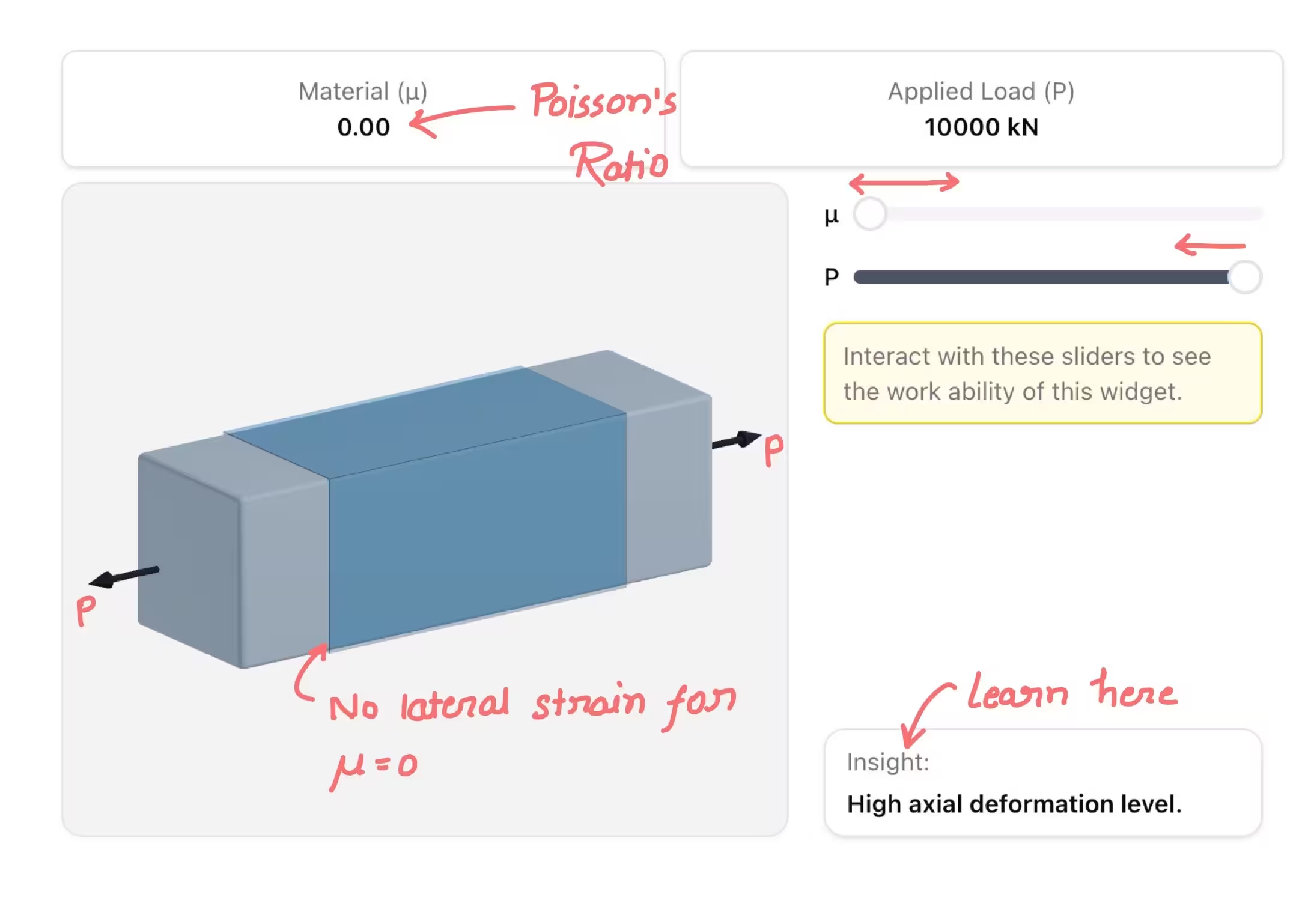 Rubber behaves differently. When compressed, it expands more in the sideways direction. Because of this, it may lose its tight grip and fail as a good seal.
This behavior is explained by Poisson’s ratio. It tells us how much a material expands or contracts sideways when stretched or compressed. This property helps engineers choose the right material for different applications.
Poisson's ratio is defined as the ratio of lateral strain to longitudinal strain. It is the material property and you will have different poisson's ratio for different set of material. When you apply elongation in the direction the elongation happens in and also. These elongation in and are called lateral elongation.
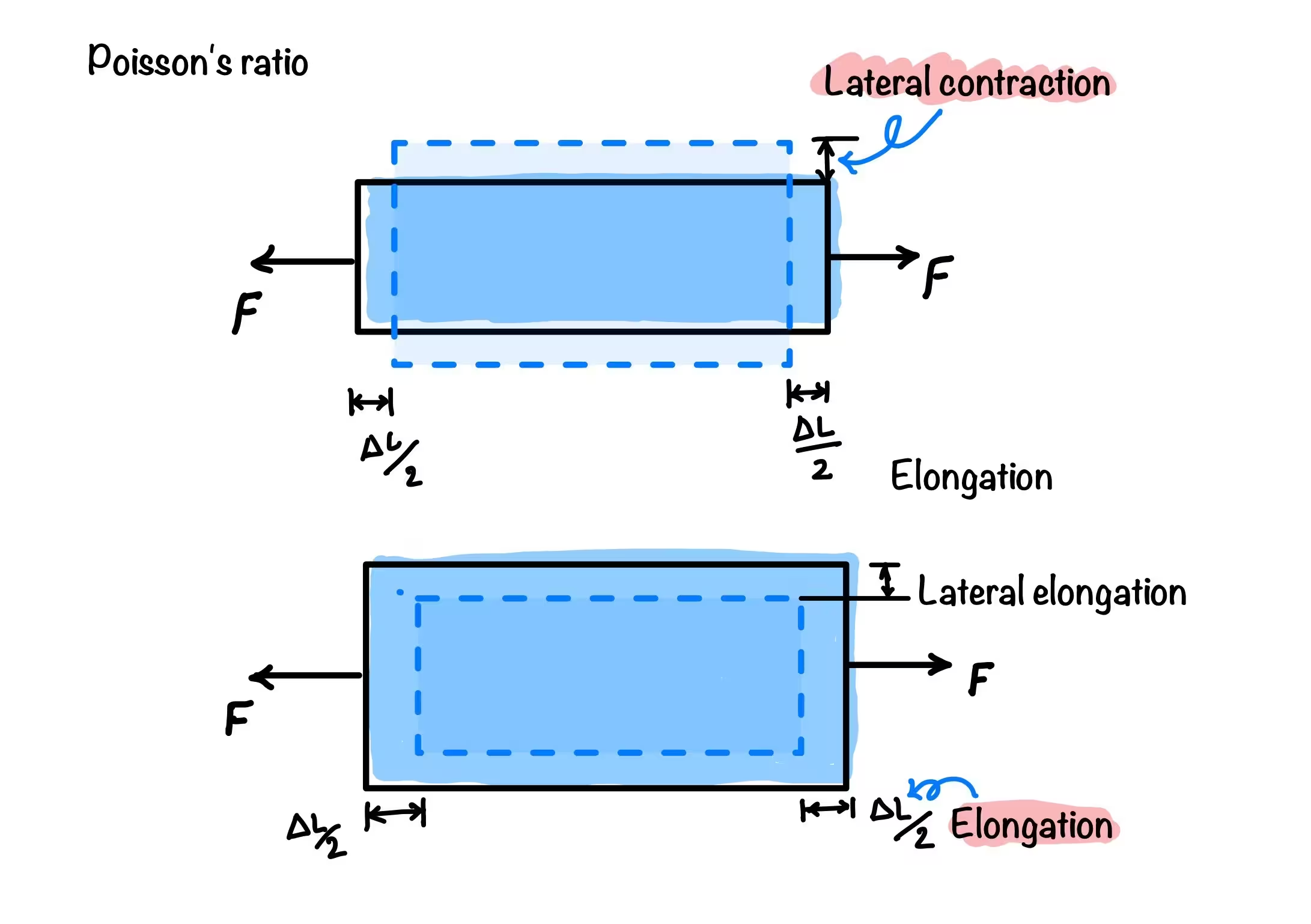
For this case Poisson's ratio is defined as:
The negative sign is due to the elongation causes lateral contraction.
To understand Poisson's ratio interactively let's start playing with this widget. First try to play with every sliders and see the changes. You can rotate the block to see more details.
If you solve to any problem from the book you can enter the values and you can get the answers from this interactive widget.
As discussed earlier, Poisson’s ratio is a material property, and its value varies for different materials.
Let’s look at a few common materials and their typical Poisson’s ratio values:
| Material | Poisson's ratio () |
|---|---|
| Cork | 0.0 |
| Foam | 0.10-0.50 |
| Glass | 0.18-0.3 |
| Concrete | 0.1-0.2 |
| Steel | 0.27-0.30 |
| Copper | 0.33 |
| Rubber | 0.4999 |
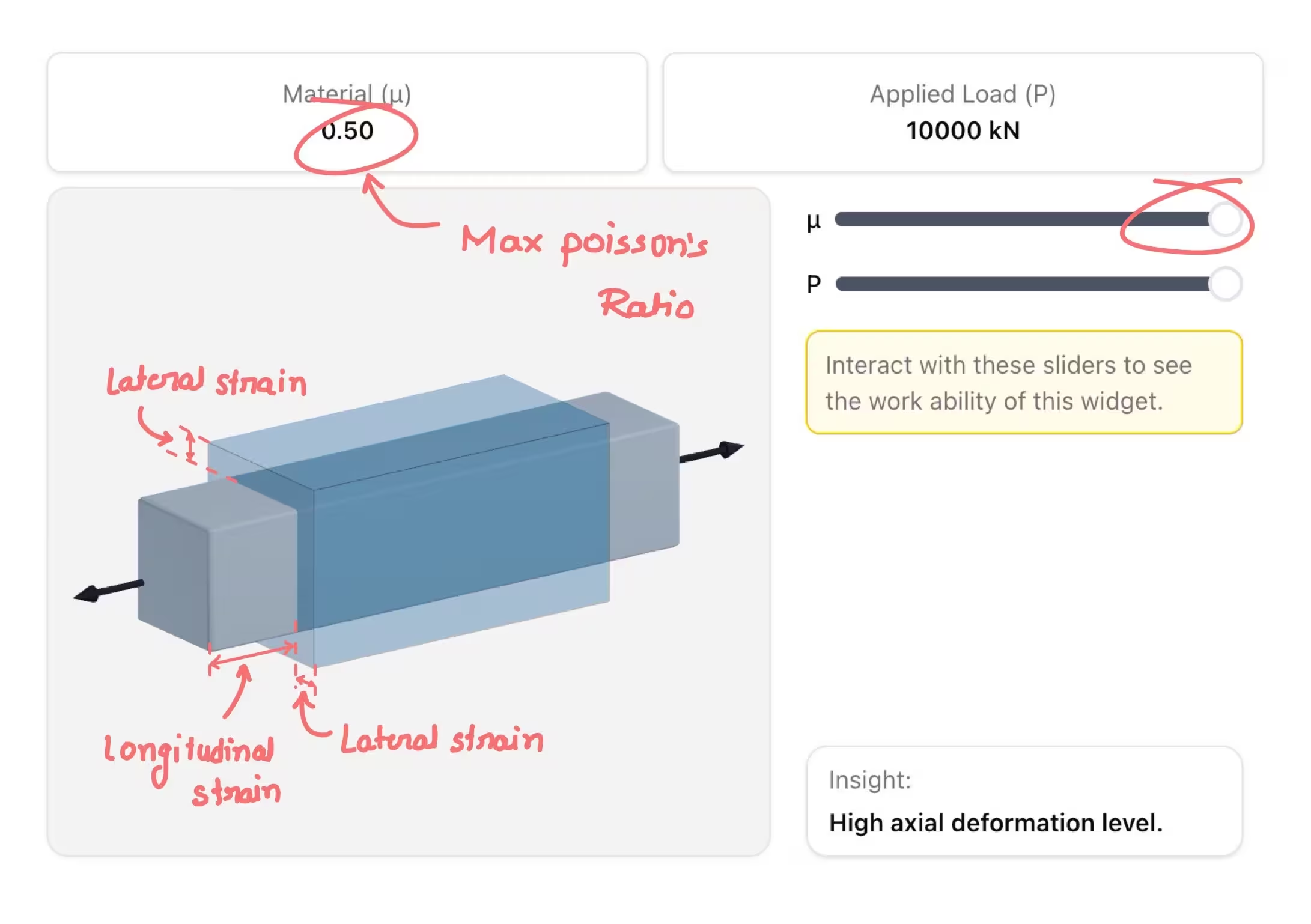
To define the maximum limit of Poisson’s ratio, let us consider a three-dimensional rectangular cube subjected to stress.
Now, let's add all the strain in all three direction to get the volume dilation.
According to our assumptions material is homogenous and isotropic. Now let's assume that the strain is equal all three directions. That means:
Hence the equation will become:
In this equation the strain and stress must be of same sign. That means due to applied tension there must be elongation. To maintain that :
Hence the value of Poisson's ratio can not be more that 0.5. The rubber has the highest value.
Most materials have a positive Poisson’s ratio, typically ranging from 0 to 0.5. However, there are some materials—both naturally occurring and specially engineered—that exhibit a negative Poisson’s ratio.
Human skin is an example of a material that can show negative Poisson’s ratio behavior under certain conditions. Materials designed to exhibit this property are known as auxetic metamaterials.
In this section you have learned the Poisson's ratio. You have also learned the Poisson's ratio value for different materials. Let's discuss about the application of Poisson's ratio:
Build a deeper understanding of core engineering concepts through interactive courses combining widgets, guided explanations, and real-world applications.

Alec Whitten • 17 Jan 2026
Like to know the secrets of transforming a 2-14 team into a 3x Super Bowl winning Dynasty?
Demi Wilkinson • 16 Jan 2026
Mental models are simple expressions of complex processes or relationships.
Candice Wu • 15 Jan 2026
Introduction to Wireframing and its Principles. Learn from the best in the industry.
Your trusted source for breaking down core engineering concepts using first-principles thinking.