
1. Introduction
Core Meets Code webinar series, organized by eigenplus, is an effort to highlight a path that often goes unnoticed: research-driven careers in engineering.
In many cases, as students, we are primarily exposed to conventional career trajectories. However, there exists a vast and impactful space where core engineering meets computation, modelling, and AI, and this is where many of today’s most challenging problems are being solved.
The intent behind the series is to give students a real, grounded understanding of what pursuing research actually looks like - not just in theory, but through real problems, real journeys, and real applications.
In that context, my goal in this session is to look at where classical mechanics is not enough, and how ideas like nonlocal theories, micropolar elasticity, and phase-field modelling help us better understand how materials fail.
2. My research journey
Let me start with a brief overview of my journey.
I did my bachelor’s in civil engineering from Jadavpur University, and after that, I briefly worked at Indian Oil Corporation. But I did not find enough interest to continue there because I always wanted to be in academia and work on problems that genuinely interested me.
So I decided to pursue a master’s at IISc Bangalore in structural engineering. During that time, I developed a strong interest in subjects like linear algebra, partial differential equations, and differential equations.
That’s when I realized something very important: 👉 If you want to be good in computational mechanics or simulations, you must be strong in mathematics.
Because of this, I chose to do my PhD in a more interdisciplinary area combining mathematics and engineering.
Later, I worked on different problems, including biomechanics, and eventually joined IIT Bhubaneswar, where my research focuses on fracture, nonlocal modelling, and computational methods.
3. What is the human analogy of stress?
To understand stress, let’s think in a very simple way.
If someone says, “I am under stress,” we cannot directly see that stress. What we see are symptoms like sweating, unusual behaviour, or discomfort.
 Figure 1: Human and material analogy of stress
From those observations, we try to understand what is happening internally.
Materials behave in exactly the same way.
👉 We cannot directly measure stress inside a material.
👉 What we can measure is deformation (strain), and from that we calculate stress.
So, if we understand stress properly, we can understand what is happening inside the material and predict failure.
4. What are the limitations of classical theory?
Classical theory gives us a good starting point to understand material behaviour, but it comes with several important limitations. One of the most fundamental issues is that when there is a crack or any kind of discontinuity in the material, classical theory predicts that the stress becomes singular, or effectively infinite, near the crack tip (Fig. 2).
However, if we think about it from a practical perspective, this is not the real scenario, because stress in a physical system cannot actually become infinite.
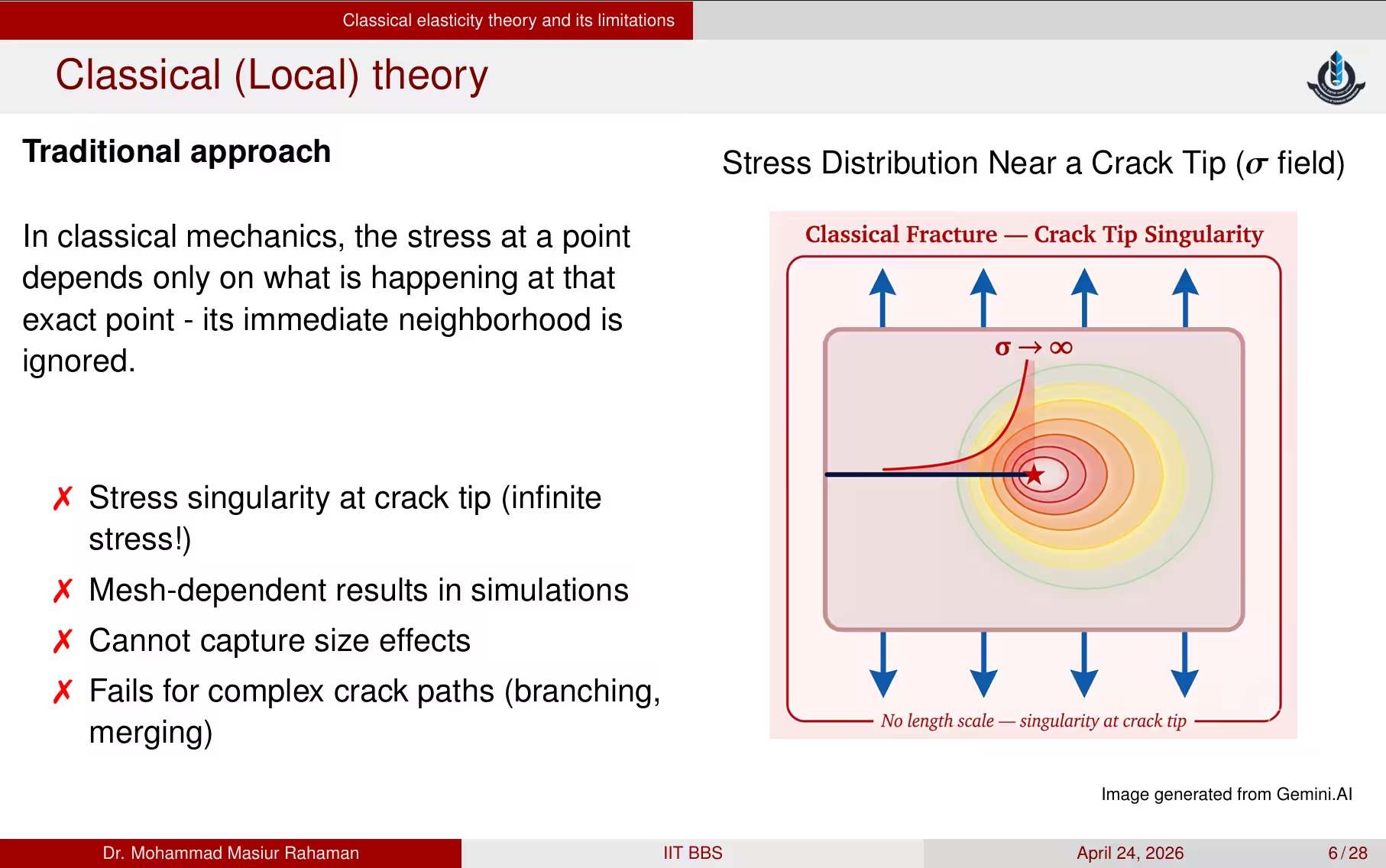 Figure 2: Limitations of classical theory
In addition to this, classical theory is not able to capture what is known as size effect (Fig. 3). In reality, when we change the size of a specimen, its mechanical behaviour can also change.
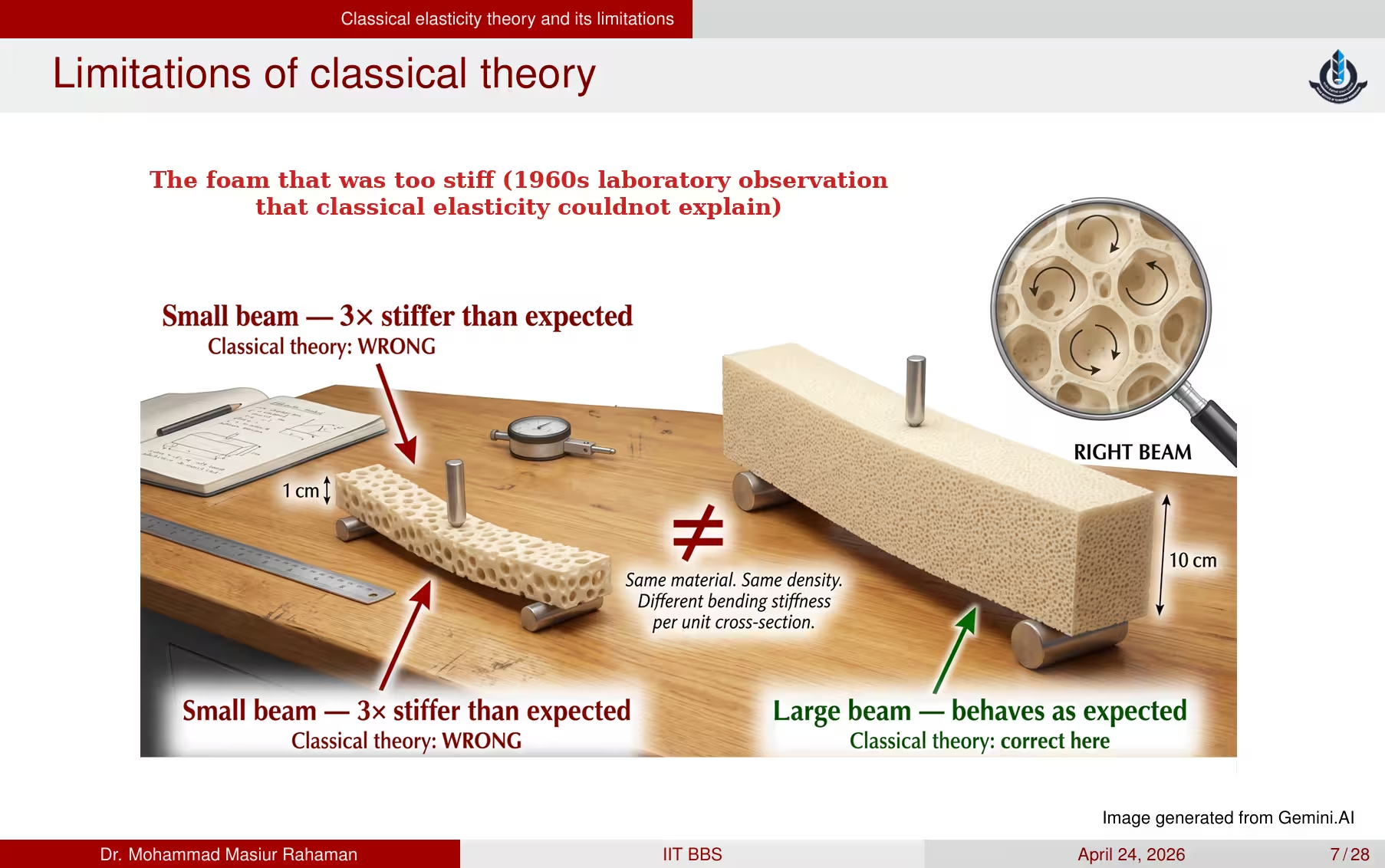 Figure 3: Limitations of classical theory to take into account the size effect
It also struggles to model complex crack behaviour such as crack branching and merging, which are commonly observed in real fracture problems. Because of all these reasons, while classical theory is useful for basic understanding, it does not fully represent how materials actually behave in real-world conditions.
5. What is the difference between classical and nonlocal theory?
The difference between classical and nonlocal theory can be understood through the analogy discussed in Fig. 4. In classical theory, a material point behaves in isolation. When an external load is applied, the stress concentrates at that point, which can even lead to unrealistic predictions like infinite stress near a crack tip.
 Figure 4: Difference between classical and nonlocal theory with an analogy to human stress
In contrast, nonlocal theory assumes that a material point interacts with its neighbouring points. Just like a person sharing stress with friends, the applied load gets distributed across a region. Because of this interaction, the stress remains finite and more realistic.
This makes nonlocal theory closer to how materials actually behave, where internal interactions prevent extreme stress concentrations.
What is nonlocal theory?
In nonlocal mechanics, the key idea is that the stress at a point does not depend only on that point, but on a weighted average of the surrounding region (Fig. 5).
This means every material point is “aware” of its neighbours. Because of this interaction, the stress near a crack tip does not become infinite, as predicted by classical theory, but instead remains finite and physically realistic.
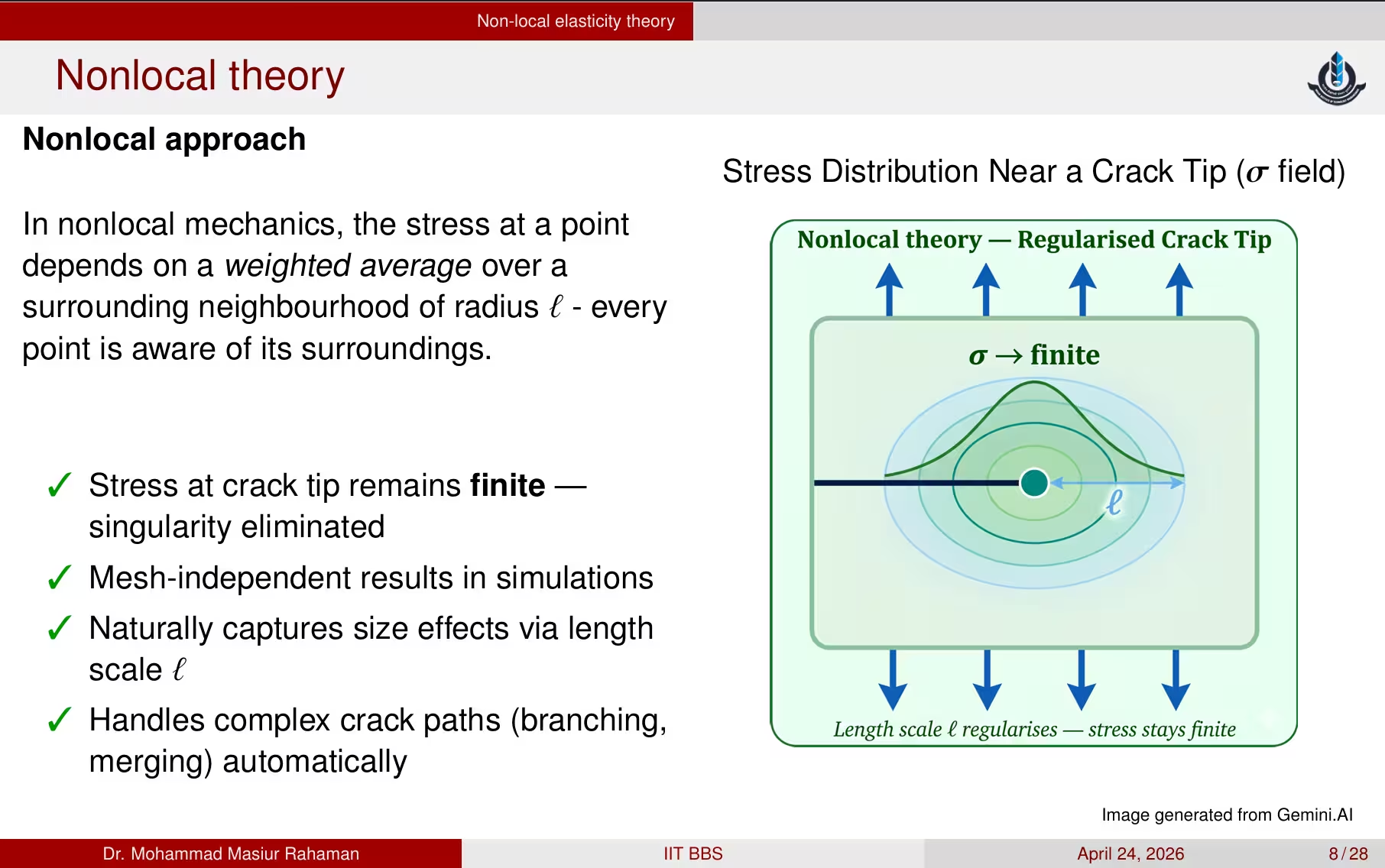 Figure 5: Introduction to nonlocal theory
This concept also explains the difference observed in material behaviour at different sizes. In classical theory, properties like stiffness remain almost unchanged when the size of a specimen is varied. However, in reality, smaller specimens tend to be stiffer, which is clearly captured by nonlocal theory (Fig. 6).
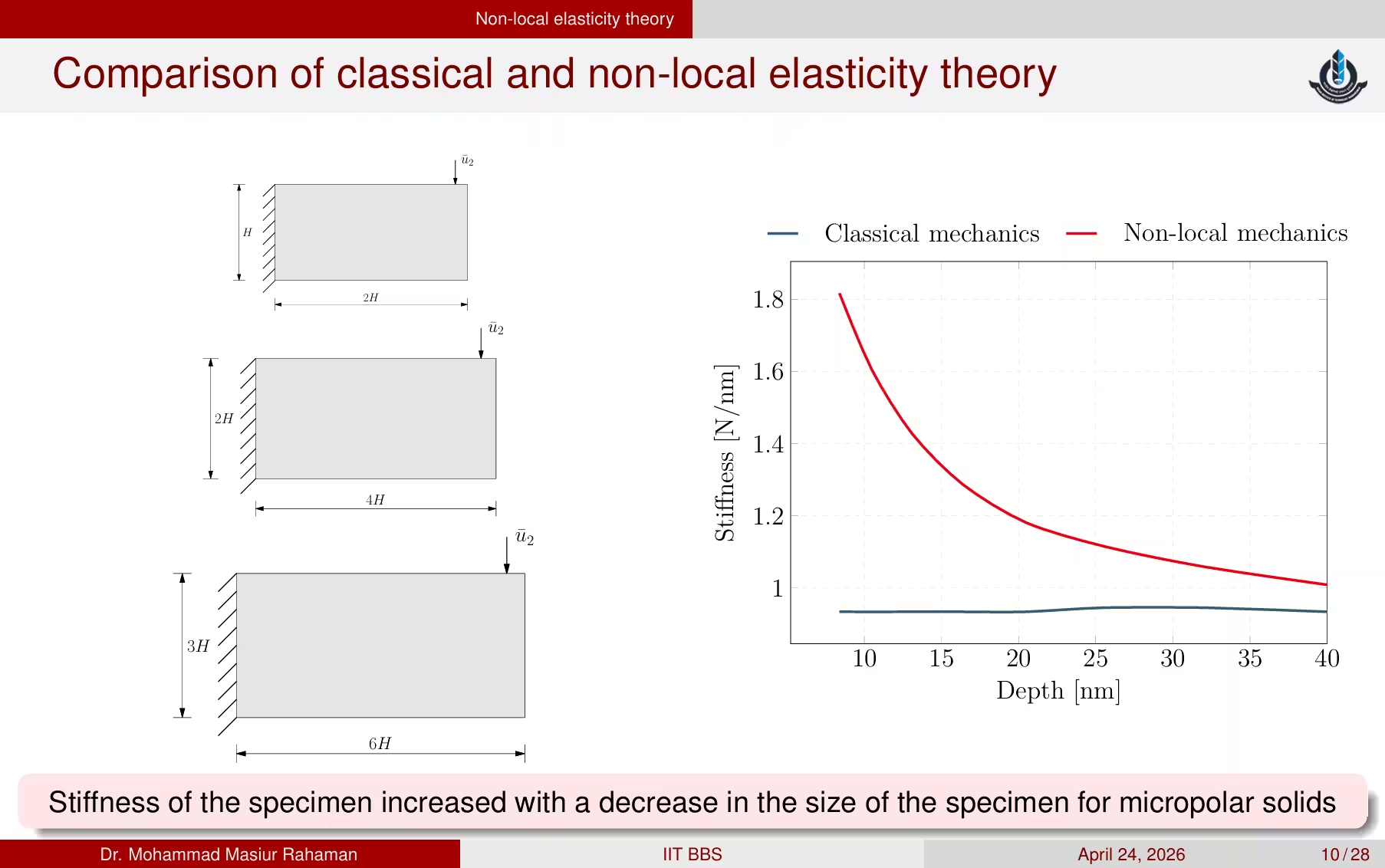 Figure 6: Effect of size taken into account with nonlocal theory as compared to classical theory
6. What is theory of micropolar elasticity?
Micropolar theory is one of the important ways to model nonlocal behaviour in materials. Nonlocal theories try to capture the fact that material points do not behave independently, but interact with their surroundings.
In micropolar theory, this nonlocality is introduced by adding an extra degree of freedom called micro-rotation (Fig. 7).
Unlike classical theory, where rotation is only derived from displacement, here each material point can rotate independently. By including these micro-rotations, micropolar theory captures the effect of microstructure within a continuum framework.
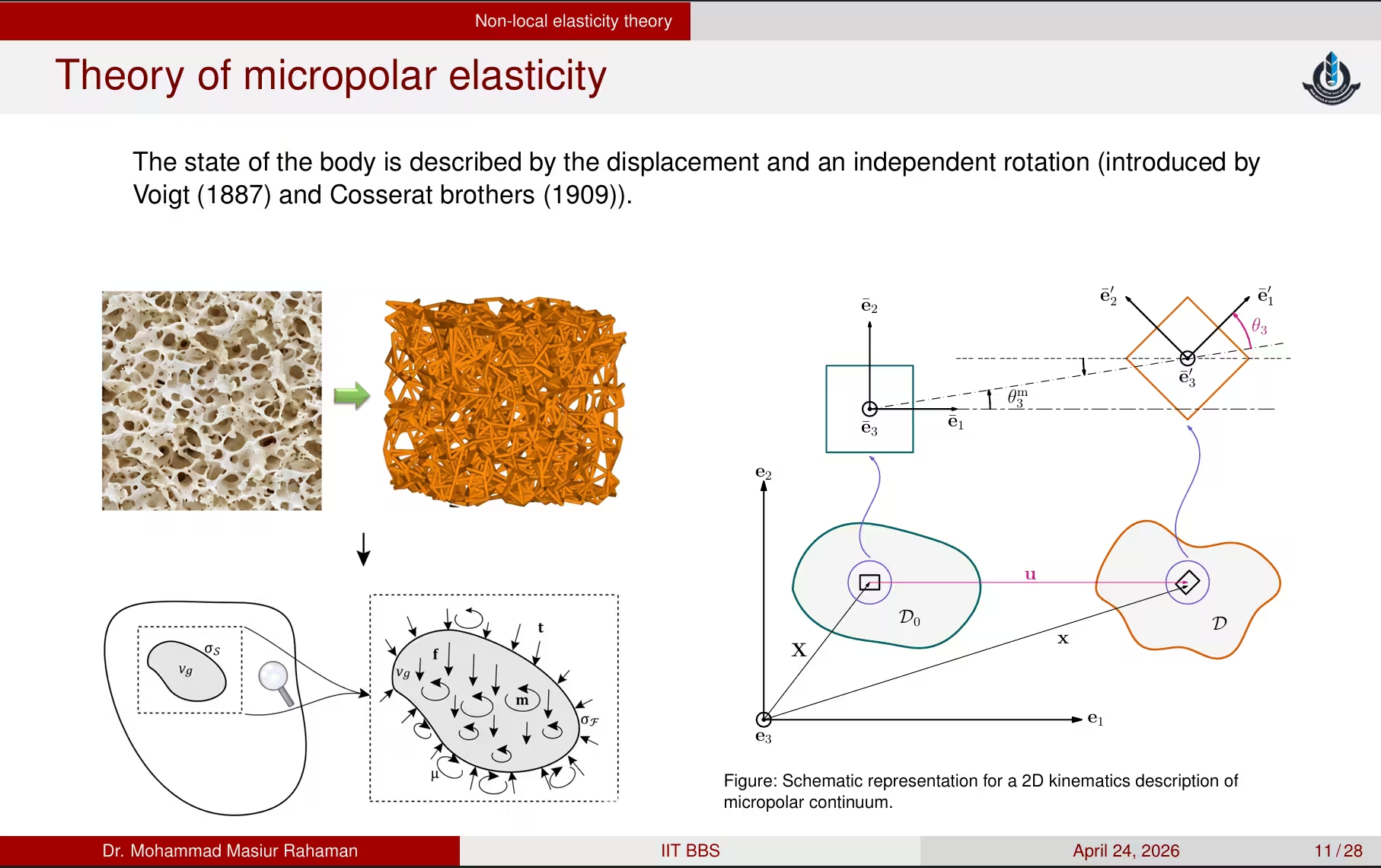 Figure 7: Theory of micropolar elasticity
7. What is the need to study microstructural changes for fracture?
Fracture does not start at the visible scale, it begins much earlier at the microstructural level.
At the largest scale, what we call the continuum scale, a material appears smooth and uniform. This is the level at which classical theories usually operate. But as we zoom in, we begin to see more detail. First, we observe grains and microstructures (Fig. 8). Going further, we see defects, microcracks, and eventually atomic arrangements. This gradual transition shows that what looks homogeneous at one scale is actually heterogeneous at a smaller scale.
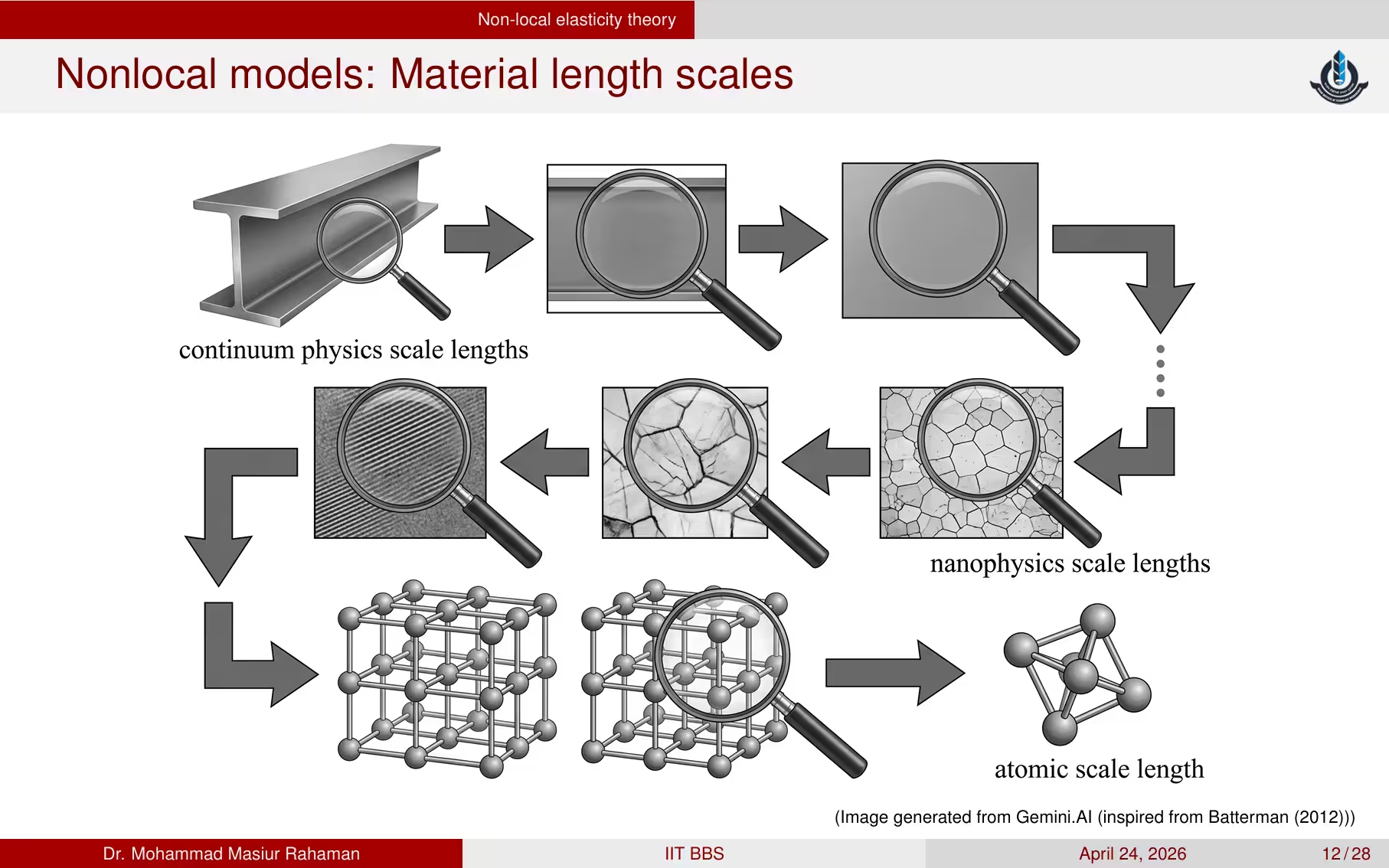 Figure 8: Understanding the importance of material length scales in fracture
Nonlocal models, such as micropolar theory, overcome these limitations by introducing a material length scale. This length scale allows the model to account for interactions over a region rather than at a single point. As a result, these models can capture size effects, include microstructural behavior, and provide more accurate predictions of fracture (Fig. 9).
 Figure 9: Importance of nonlocal models in capturing material length scales variation
9. What are the applications of micropolar theory?
Unlike classical elasticity, micropolar theory introduces additional variables, particularly micro-rotation, along with displacement.
The strain is no longer just based on displacement gradients but also includes rotational effects (Fig. 10). This leads to modified governing equations that account for both force balance and moment balance.
Importantly, the formulation introduces characteristic length scales, which allow the model to capture size-dependent behaviour. These parameters help describe how materials respond differently at different scales, which is a key limitation of classical models.
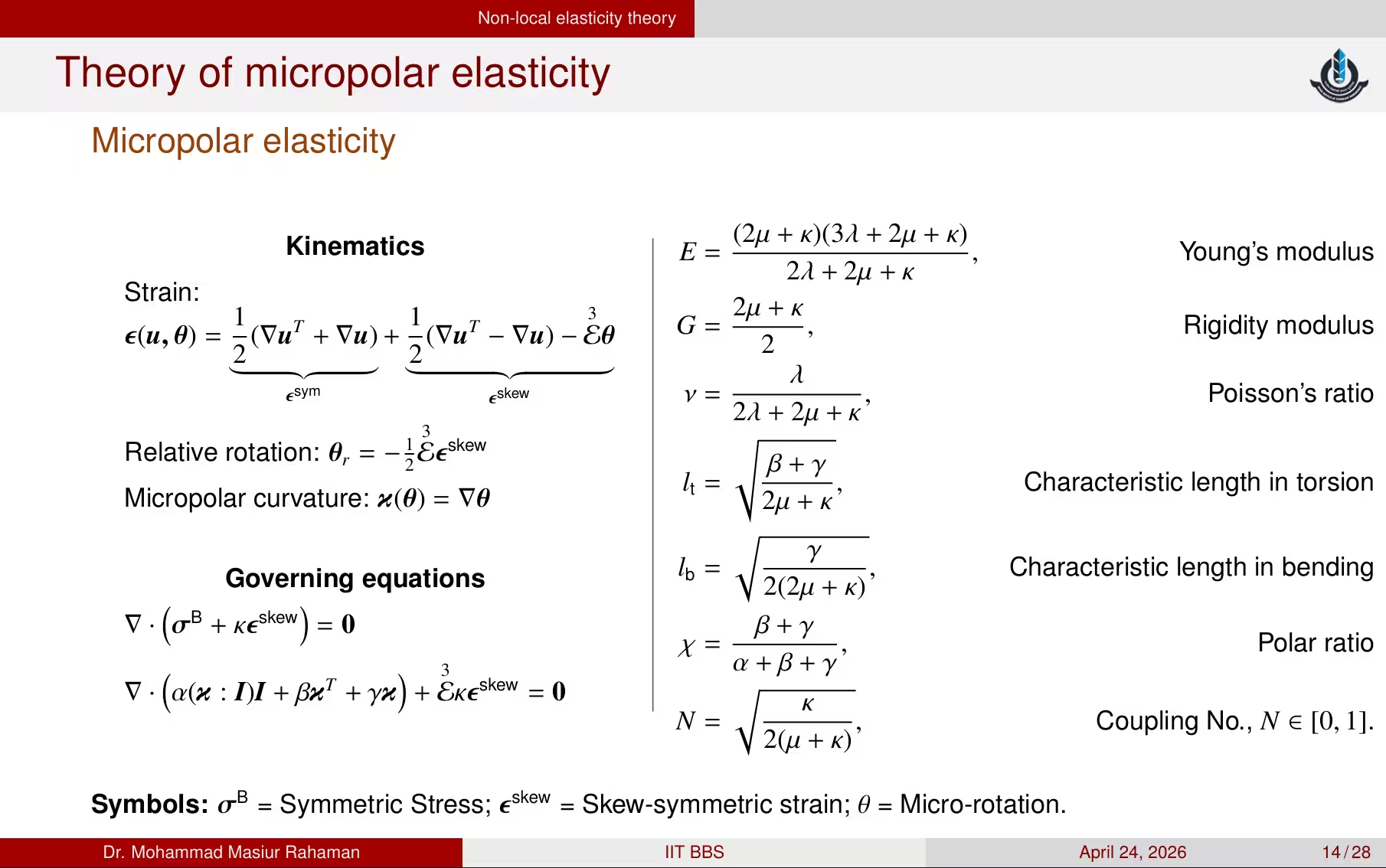 Figure 10: Fundamental equations used in micropolar elasticity
Figure 11 below highlights a wide range of real-world applications. What ties all these applications together is the presence of internal structure and local rotations, which classical theory cannot capture effectively.
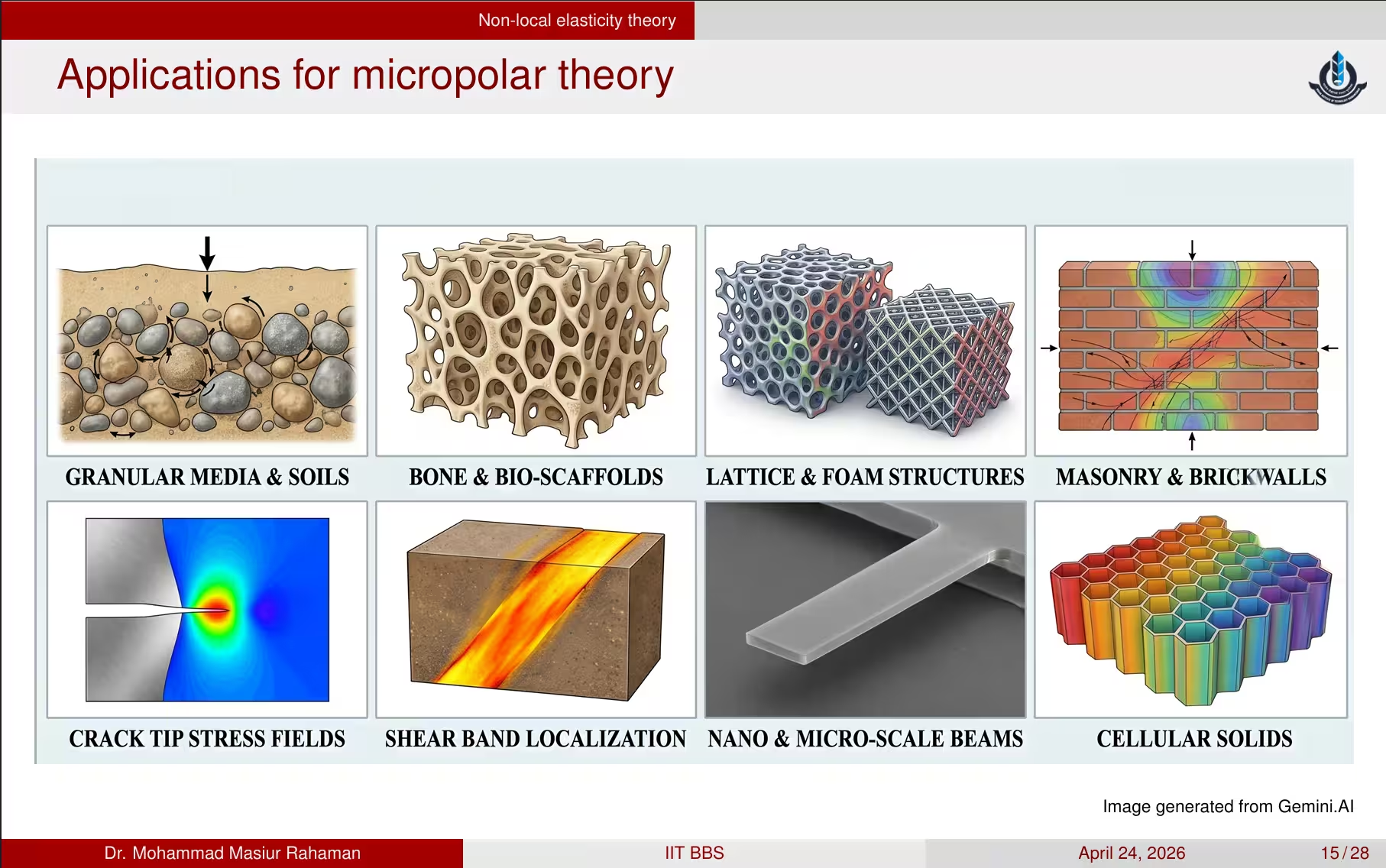 Figure 11: Applications of micropolar theory
10. Why fracture is important with real-world problems?
Fracture is not just a theoretical concept, it is central to many real-world engineering problems. Almost every structural failure, whether in buildings, machines, or materials, begins with small defects that are often invisible.
If we understand how cracks initiate and propagate, we can design systems that are safer, more reliable, and more resistant to failure. This is why studying fracture mechanics is essential in engineering practice.
Read more about fracture in the link here.
11. Why nonlocal theory is important for fracture?
As we have seen throughout the discussion, fracture is inherently a nonlocal phenomenon. It does not depend only on what happens at a single point, but on interactions across a region.
Microcracks form, interact with each other, and evolve collectively. Classical theory, which treats each point independently, cannot capture this behaviour accurately. This is why it leads to unrealistic predictions such as infinite stress.
Nonlocal theory overcomes this by allowing stress and deformation to depend on the surrounding neighbourhood. By introducing a material length scale, it captures these interactions and provides a much more realistic description of fracture.
Figure 12 is an example of modeling fracture in bones using nonlocal theory.
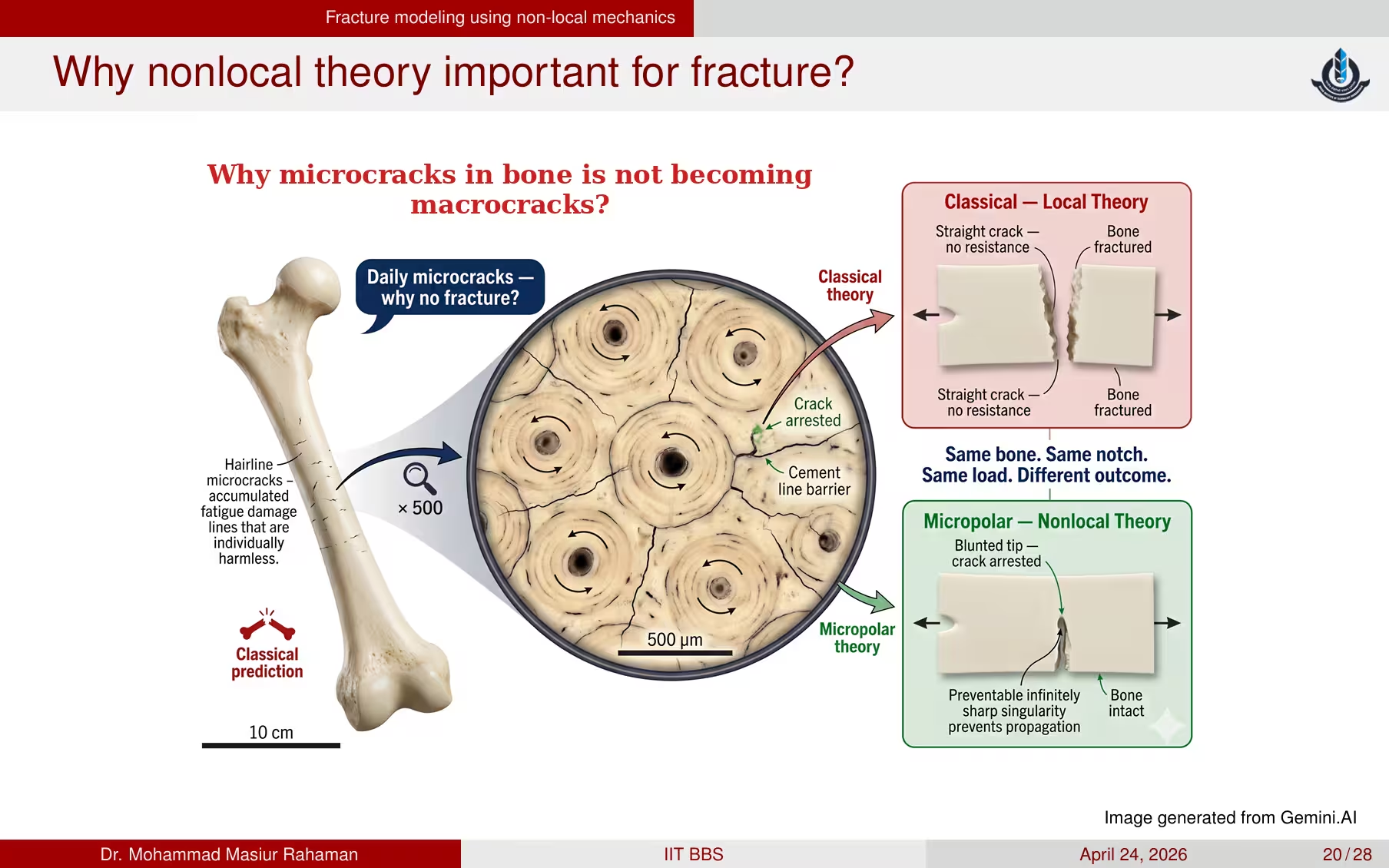 Figure 12: Importance of nonlocal theory in modeling microcracks in bone
12. What is phase-field modelling and its limitation?
While nonlocal and micropolar theories improve our understanding of material behaviour, another important approach in fracture modelling is the phase-field method.
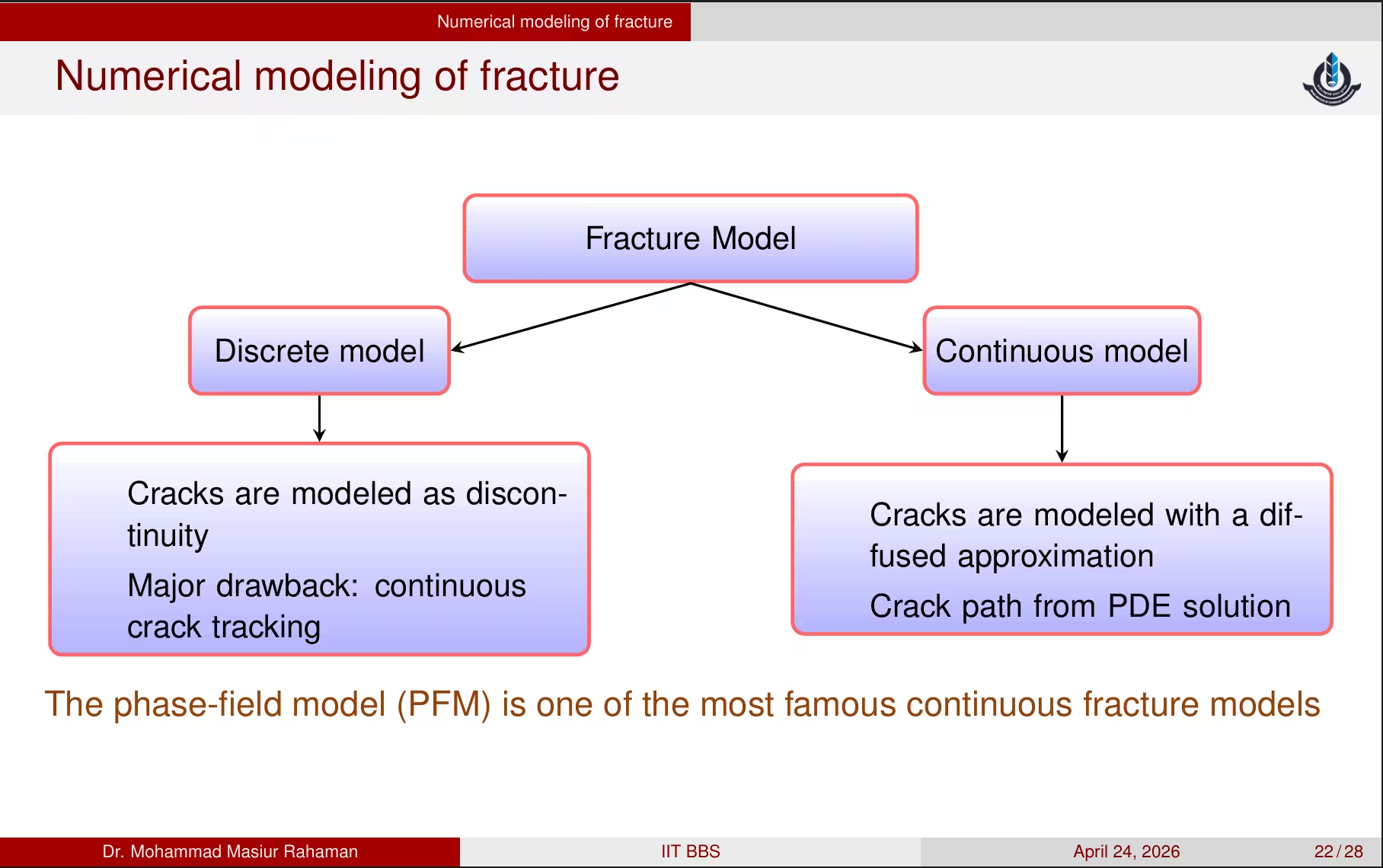 Figure 13: Phase-field method-most famous continuous fracture model
In this method, instead of representing cracks as sharp discontinuities, we represent them as a smooth damage field. This avoids the need to explicitly track crack paths and allows us to use standard numerical methods like finite element analysis. As a result, it becomes easier to model complex crack patterns such as branching and merging.
However, there is a limitation. In classical phase-field models, the length scale parameter is often introduced mainly for numerical stability. It does not always have a clear physical meaning, especially when microstructural effects are important.
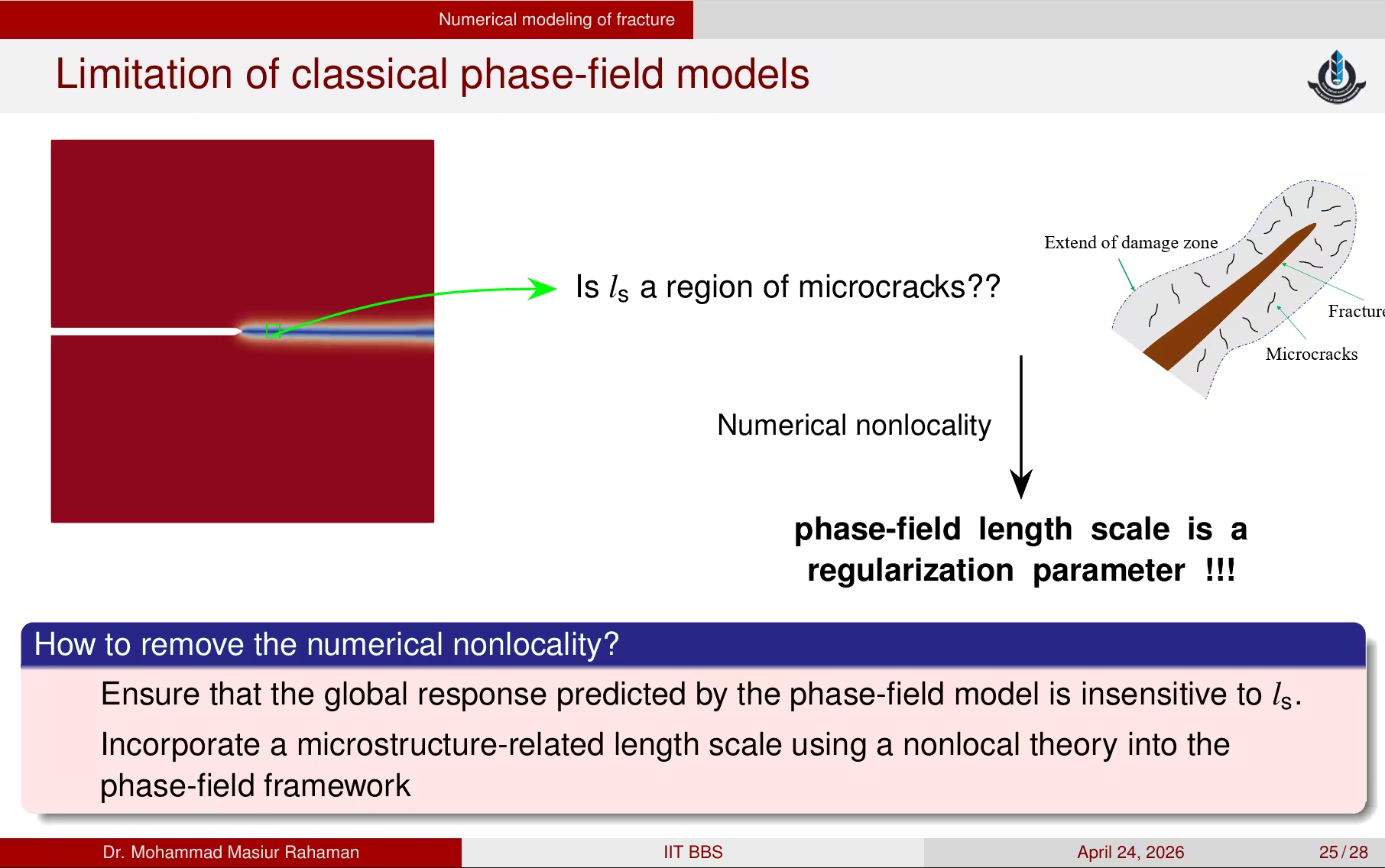 Figure 13: Limitation of phase field models in accounting for microstructural changes
13. What are micropolar mode-dependent phase-field models and what are its use cases?
To overcome the limitation of phase-field models in accounting for microstructural effects, researchers combine micropolar theory with phase-field modelling.
This combination introduces a physically meaningful length scale, derived from the material’s microstructure, rather than just a numerical parameter. As a result, the model becomes more realistic and better aligned with experimental observations.
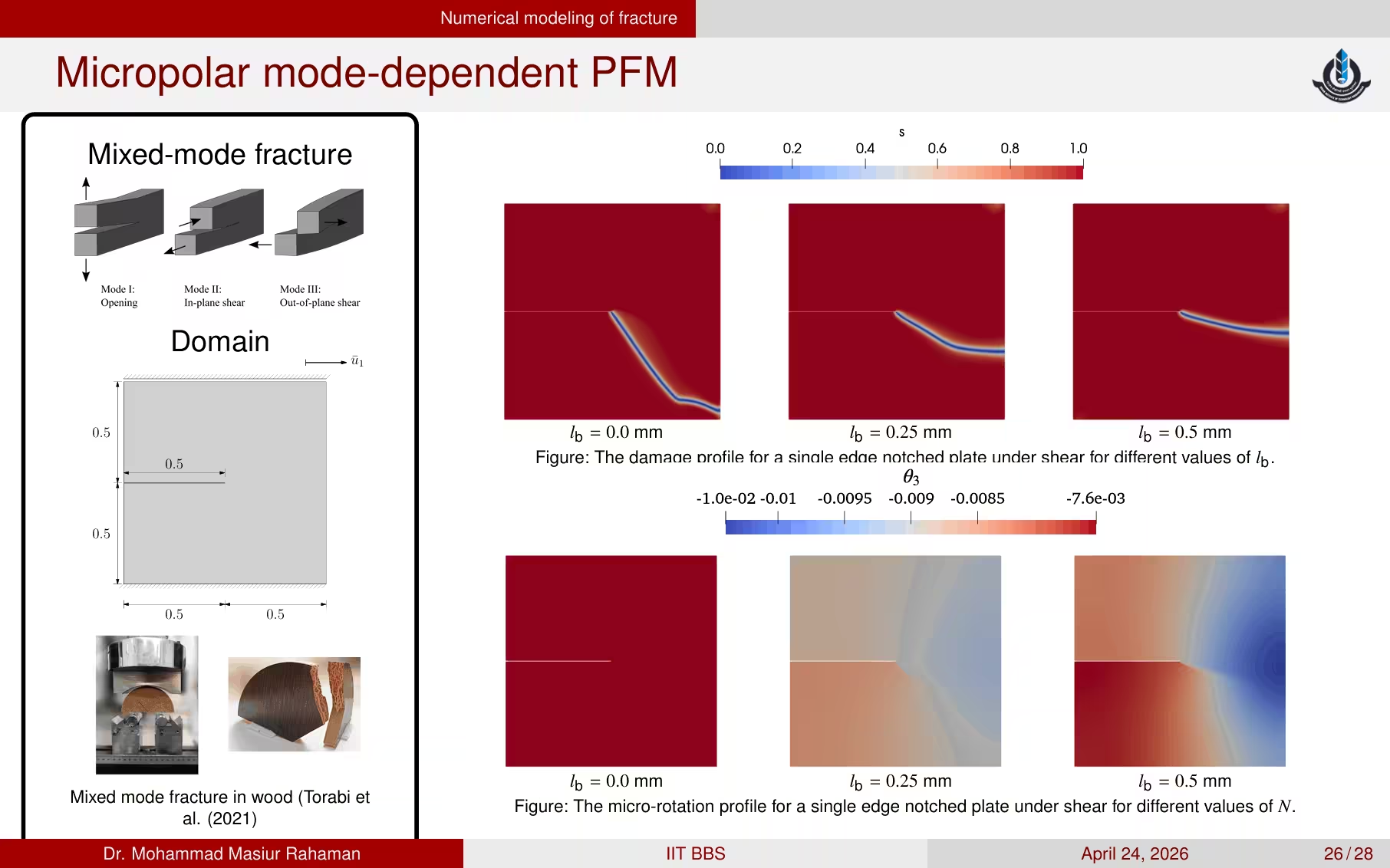 Figure 14: Micropolar mode-dependent phase-field models
Figures 15 - 17 show various use-cases of micropolar phase-field method for real-world applications.
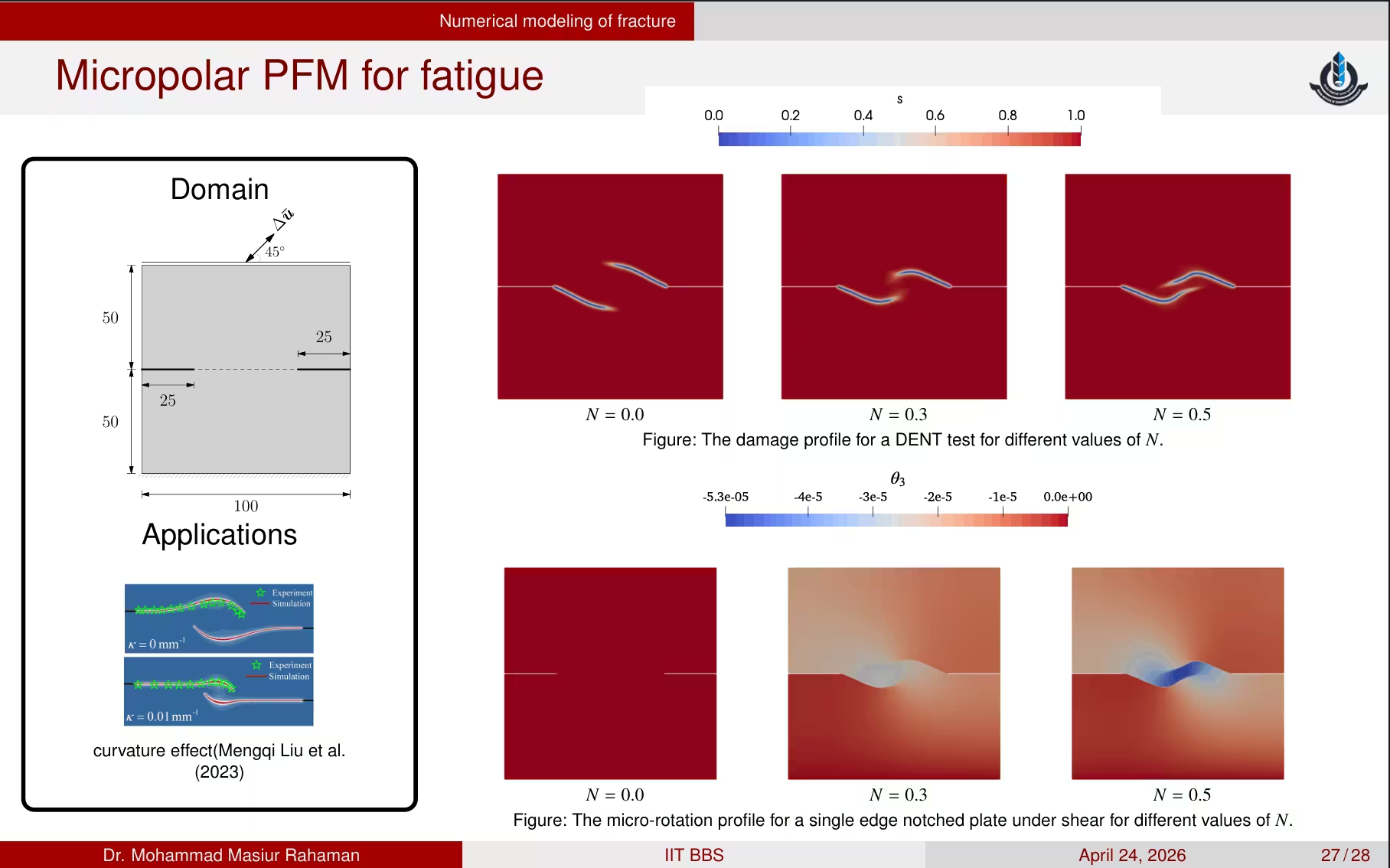 Figure 15: Micropolar phase-field method for fatigue
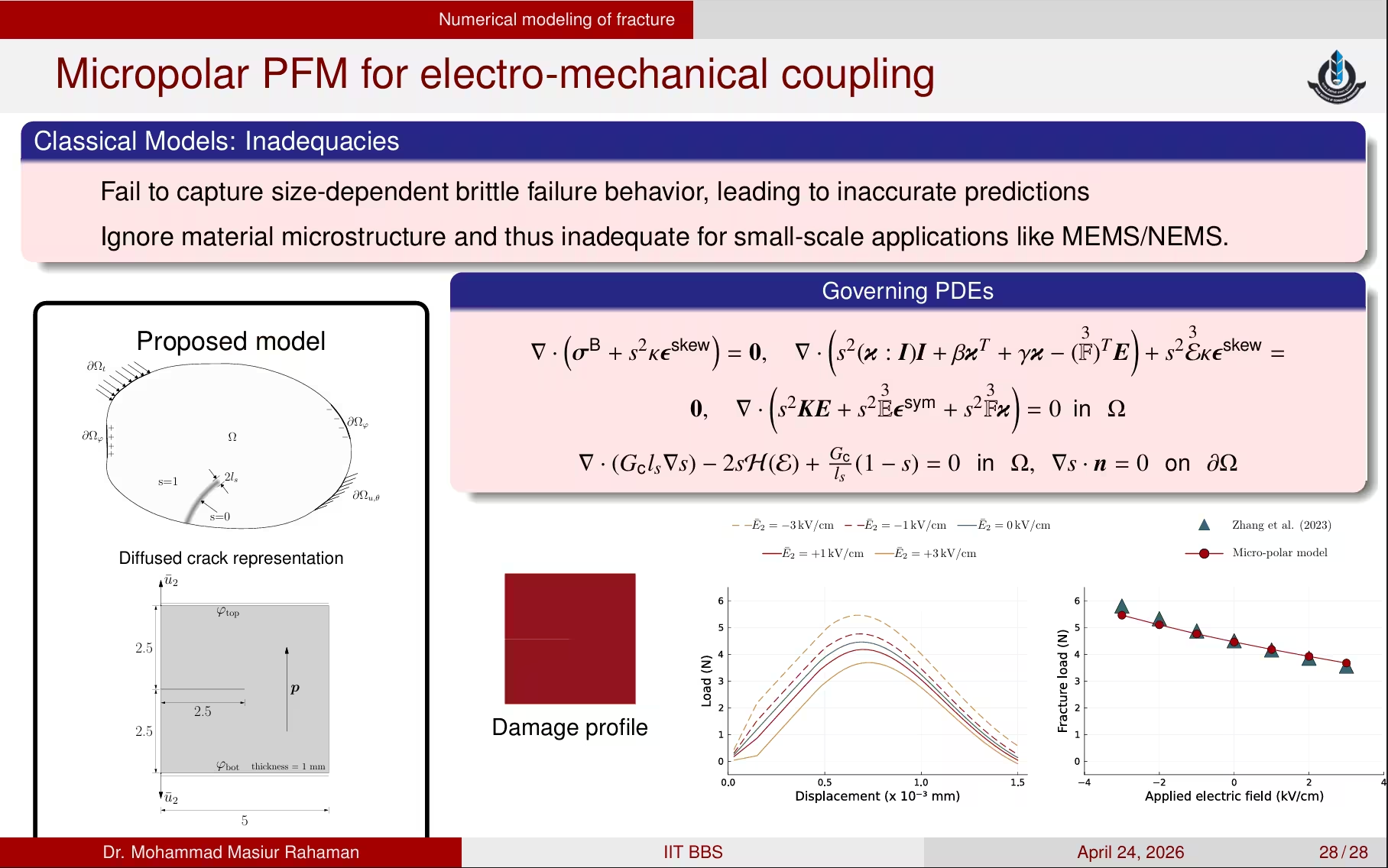 Figure 16: Micropolar phase-field model for electro-mechanical coupling
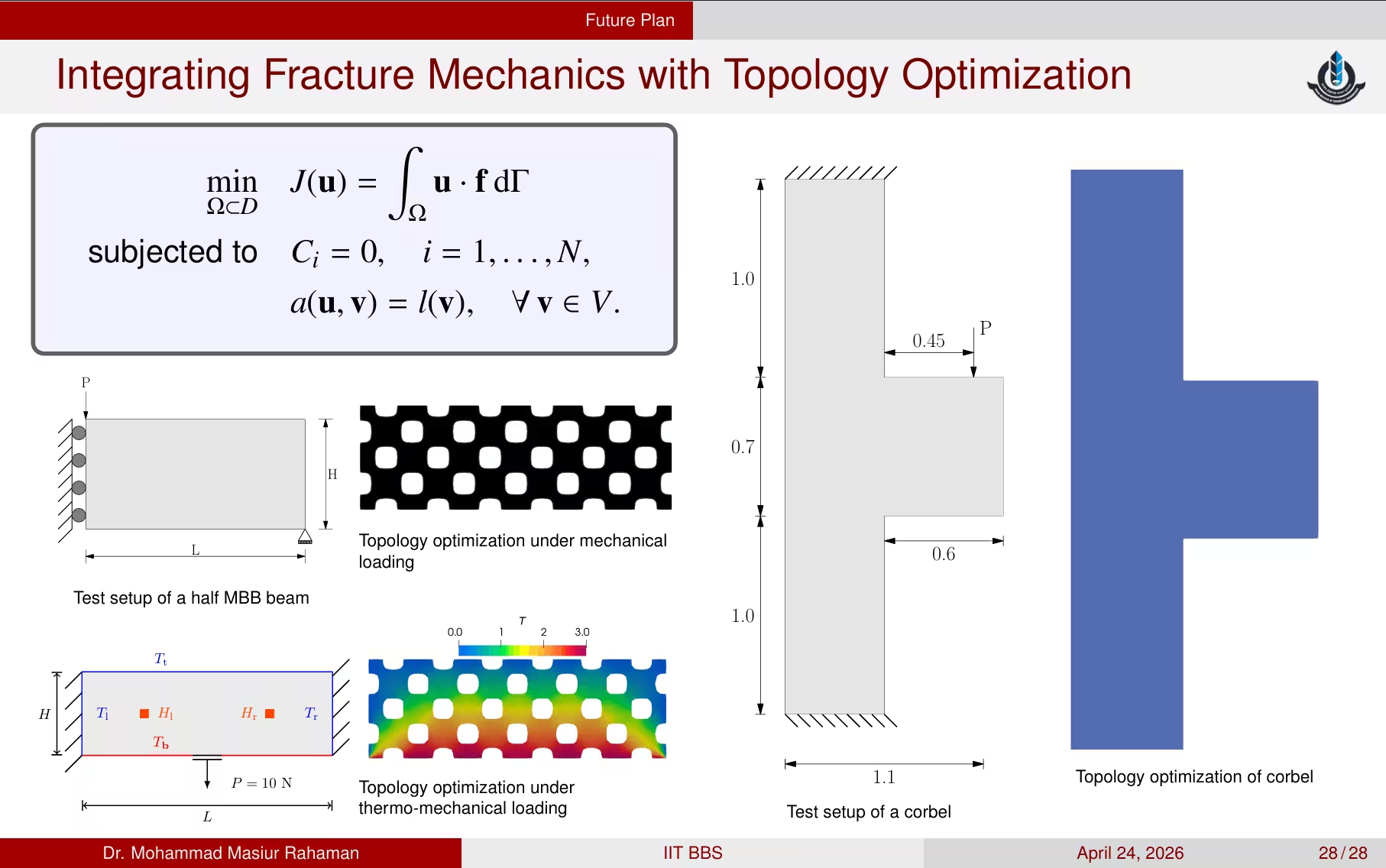 Figure 17: Integrating fracture mechanics with topology optimization